For the fifth consecutive year, Microsoft will showcase its impact on automotive as the secure technology platform powering the next frontier of automotive innovation. With our cloud and AI solutions, along with our ecosystem of acceleration partners, Microsoft is transforming processes across the automotive "V" model—from requirements and engineering to development and testing.
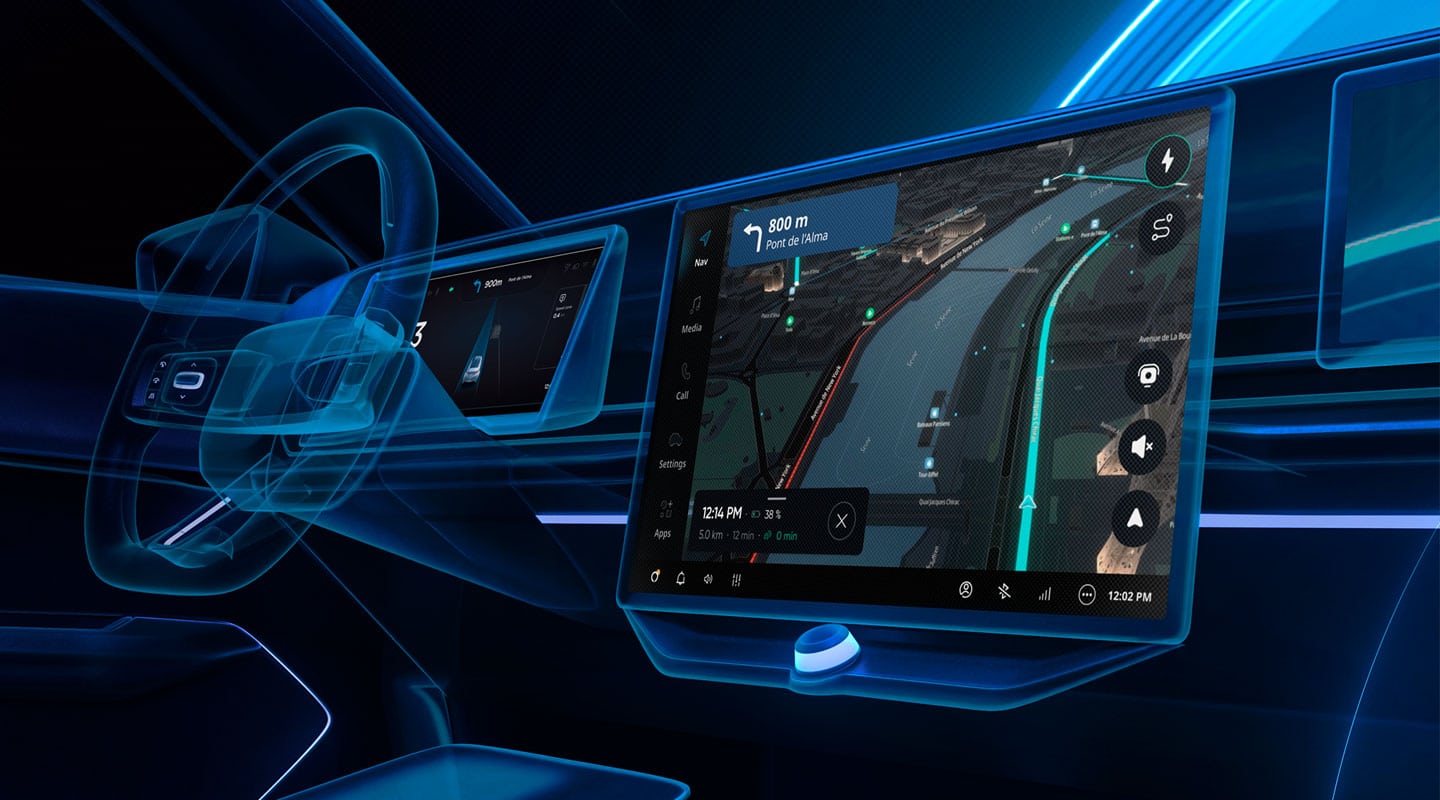
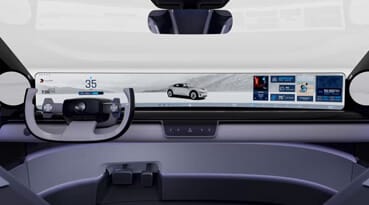
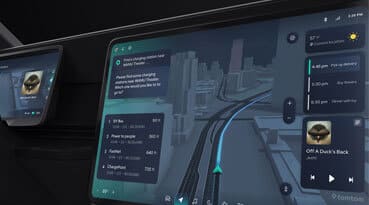
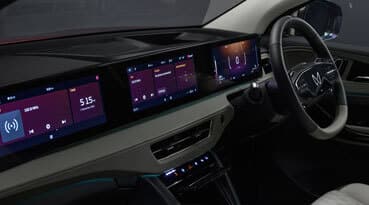
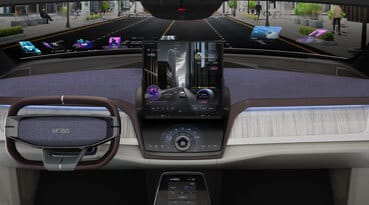
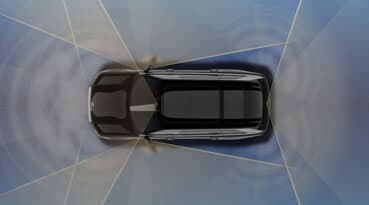
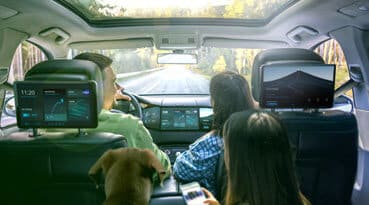
At CES 2026, we are particularly focused on the transformation within digital engineering, helping our automotive and mobility customers establish strong software capabilities. This includes areas such as SDVs, embedded software, vehicle advanced driver-assistance systems (ADAS), and autonomy. In addition, meeting OEMs brand differentiation requirements through unique in-vehicle experiences with a focus on the digital cockpit is another core spotlight.
Our customers and partners also seek our differentiation around enterprise-grade security, global-scale cloud, AI copilots integrated across engineering workflows, and an open ecosystem vs. vertically locked platforms.
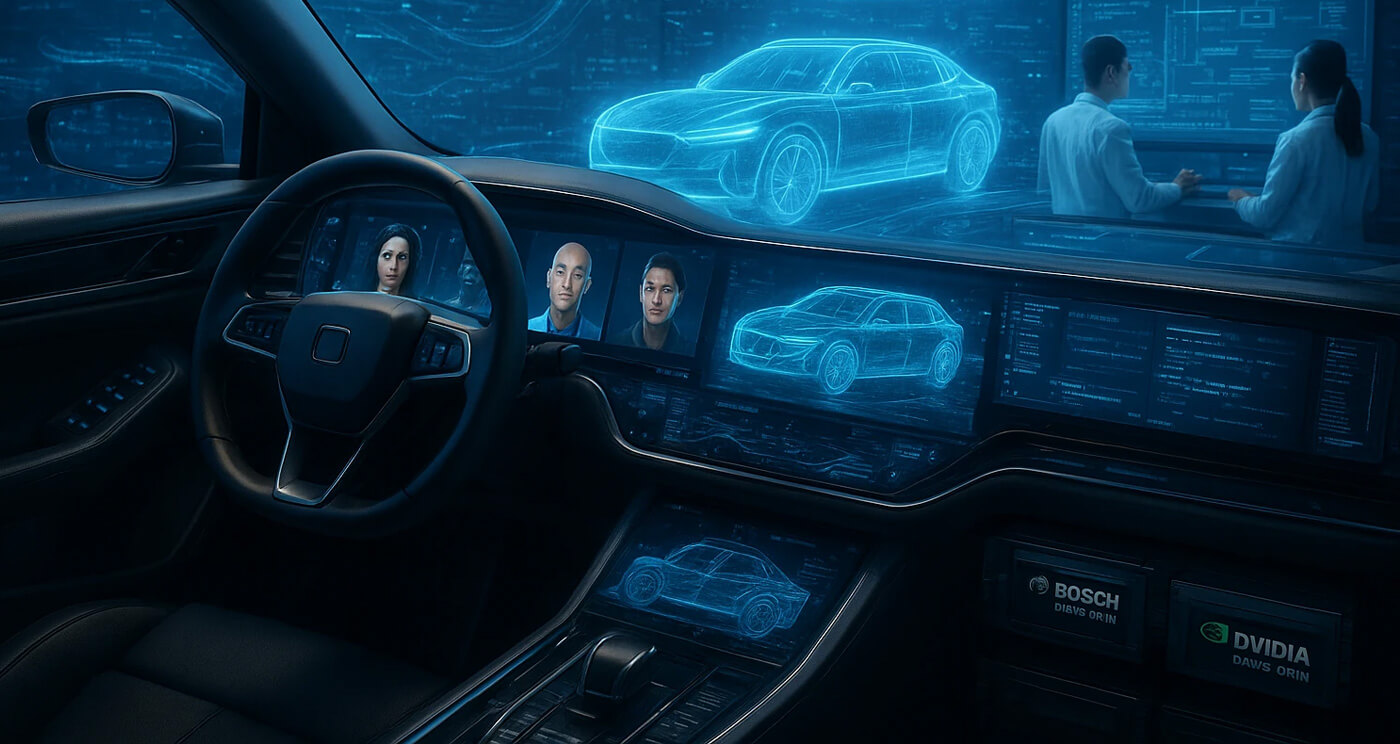
At CES 2026, Microsoft and our partners are demonstrating how AI-powered engineering and in-vehicle intelligence are converging to accelerate SDV development and redefine the driver experience.
Digital engineering
Digital engineering demands cloud infrastructure that can scale globally, adapt in real time, and deliver consistent performance across increasingly complex workloads—from AI inference and data-intensive analytics to embedded development and full vehicle simulation. Recent Microsoft Azure innovations remove longstanding compute and operational bottlenecks by supporting heterogeneous architectures such as Arm64, graphics processing units (GPUs), and field-programmable gate arrays (FPGAs), enabling end-to-end engineering from chip to cloud. Elastic scaling empowers globally distributed teams with cloud-native CI/CD pipelines and real-time analytics, while high-performance computing accelerates software-defined vehicle (SDV) development through advanced simulation, validation, and software-in-the-loop testing—allowing teams to move faster, validate earlier, and bring intelligent systems to market with greater confidence.
We shared some exciting new announcements in both digital engineering and in-vehicle innovation below:
AMD and Siemens: AMD is providing new engineering support for OEMs and Tier 1 suppliers with the AMD VAS stack running on Microsoft Azure, enabling virtualization of development environments. This integration enables systems-level simulation to support earlier engineering validation efforts aimed at improving efficiency, reducing development risks with SDV development, and reducing time to market.
With this capability, Siemens will integrate their PAVE360™ digital twin simulation environment into the AMD VAS stack on Azure, providing developer support for AMD compute and graphics technologies. Discussing this and other topics further at CES 2026, Siemens will also feature a panel lineup with President and Chief Executive Officer Roland Busch joined by executives from NVIDIA, Microsoft, PepsiCo, and Commonwealth Fusion. The panel will share a dialog on the impact of AI in transforming the physical world to transform manufacturing, infrastructure, and transportation.
ETAS: As a leading provider of innovative solutions for the development of automotive software, emergency technical assistance service (ETAS) brings its core calibration suite to Azure, enabling automotive engineers to accelerate SDV development through cloud-based engineering tools. The ETAS toolchain on Azure enables OEMs to move software development activities to start an earlier point in time, a term known as "shift-left," which enables late-stage vehicle development processes to be performed earlier—saving time, improving quality, and enabling faster iteration cycles.
KPIT: KPIT will demonstrate their Next-Generation Agentic AI Solution Suite at CES 2026—a flexible, cloud-based tool designed to make vehicle software development faster, more reliable, and cost-effective for automakers. By using advanced AI on Azure, KPIT helps OEMs improve the way they design, and build connected and self-driving vehicles. This technology provides more efficient processes to update vehicle software, diagnose and resolve problems more quickly, and deliver better experiences for drivers, leading to higher quality vehicles and more satisfied customers.
Neural Concept: Neural Concept focuses on improving vehicle aerodynamics, a critical factor for enhancing vehicle performance, energy efficiency, and reducing development costs. As development timelines in the automotive industry continue to shorten, the demand for data-driven approaches that complement or replace traditional computational fluid dynamics (CFD) workflows become increasingly important. By utilizing the MIT DrivAerNet++ dataset—which contains 8,000 vehicle designs and extensive CFD information, Neural Concept supports advanced research and development in engineering. These innovations empower automakers to achieve design cycles that are 30% shorter.
PTC: Considering speed to market, PTC announced a collaboration with Lamborghini S.p.A to improve overall product lifecycle through their centralized data foundation that connects design, engineering, and operations with enhanced AI capabilities. Also, through their collaboration with Microsoft, PTC will demonstrate a new engineering change management solution—an AI-powered agent to streamline the engineering workflow that has broad applicability even beyond automotive.
Renesas: Continuing with the theme of digital engineering and SDV, Renesas, an advanced semiconductor solutions provider, announced an industry first integration to create a vendor-neutral SDV-as-a-Service platform, powered by Azure along with Visual Studio Code integration, GitHub CI/CD pipelines, and Microsoft Copilot AI. The Renesas RoX DevStudio enables OEMs and other partners with cloud-based tools to architect, develop, simulate, test, and deploy SDV architectures, supporting the entire v-model.